

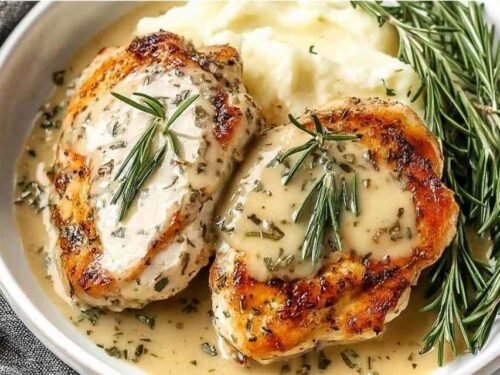
Rosemary Dijon Chicken is one of those recipes that looks impressive on the table but takes almost no effort to pull together. The tangy bite of Dijon mustard, the woodsy fragrance of fresh rosemary, and a silky cream pan sauce all come together in one skillet. As a home cook who has tested this more times than I can count, I can tell you — the flavor payoff is real and it never gets old.
I made this for the first time on a random Wednesday when I needed something that felt a little special without a lot of cleanup. The golden sear, the smell of garlic and rosemary hitting that hot butter, the way the cream sauce thickens around the chicken — my kids had seconds before I even sat down. Rosemary Dijon Chicken has been on our regular rotation ever since. It works just as well for a laid-back weeknight as it does for a dinner party where you want to look like you actually tried. You are going to love this one!
Table of Contents
Ingredients for Rosemary Dijon Chicken
For this recipe I always reach for fresh rosemary and a good Dijon mustard because those two ingredients carry the whole dish. It is a short ingredient list, but every single item earns its place on the pan.
- 2 large chicken breasts (halved lengthwise for even cooking)
- All-purpose flour for coating (a light dusting only — I recommend just enough to create a thin crust)
- 1 tbsp olive oil — My preference is extra virgin for the best flavor
- 1 tbsp unsalted butter
- 3 sprigs fresh rosemary — In my experience, fresh rosemary makes a noticeable difference over dried here
- 1/2 cup dry white wine
- 3 cloves garlic (minced)
- 3 tbsp Dijon mustard — I always use a quality brand for that bold tangy bite
- 1 cup heavy whipping cream
- Salt and pepper to taste
Step-by-Step Instructions
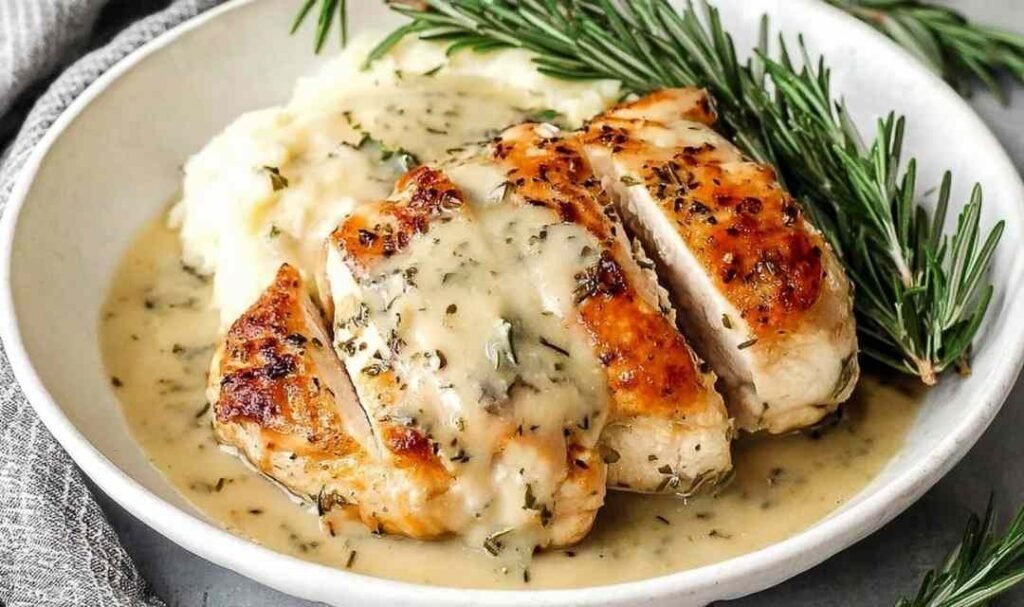
I recommend reading through all the steps once before you start. This Rosemary Dijon Chicken comes together quickly once the searing begins, and knowing what comes next keeps the process smooth and stress-free.
Step 1: In a small bowl, whisk together the Dijon mustard, minced garlic, olive oil, and a pinch of black pepper until smooth. Place the chicken breast halves in a shallow dish or resealable bag, pour the marinade over them, and refrigerate for at least 30 minutes. If you have time, up to 4 hours gives even deeper flavor.
Step 2: When ready to cook, preheat your oven to 375 degrees F. Remove the chicken from the fridge and let it rest at room temperature for about 10 minutes. Lightly coat each piece in flour and season with salt and pepper.
Step 3: Heat the olive oil and butter in an oven-safe skillet over medium-high heat. Once the butter is foaming, add the chicken and sear for 3 minutes per side until deep golden brown. Do not move the chicken while it sears — let it develop that crust. Work in batches if your skillet is small.
Step 4: Remove the chicken and set aside. Add the minced garlic and rosemary sprigs directly to the hot skillet. Stir for about 30 seconds until fragrant, then pour in the white wine to deglaze, scraping up any browned bits from the bottom. Those bits are pure flavor.
Step 5: Whisk in the Dijon mustard and heavy cream. Stir over medium heat until the sauce is smooth and slightly thickened, about 2 to 3 minutes. Taste and adjust seasoning with salt and pepper. If the sauce feels too thick, add a small splash of white wine to loosen it.
Step 6: Return the seared chicken to the skillet, nestling it into the sauce. Transfer the entire skillet to the preheated oven and bake uncovered for 25 to 30 minutes, basting the chicken with pan juices halfway through. Check doneness with a meat thermometer — the internal temperature should read 165 degrees F.
Step 7: Remove from the oven and let the chicken rest in the pan for 5 minutes before serving. This resting time keeps the juices locked inside and gives the sauce time to settle.
Perfect Sides to Serve with Rosemary Dijon Chicken
The rich, tangy cream sauce in this dish pairs best with sides that can hold their own in flavor or offer a fresh contrast. Here are my go-to combinations.
Wild Rice: The nutty, earthy texture of wild rice is a natural match. It soaks up the rosemary Dijon sauce and rounds out the plate beautifully. This is my top pairing for dinner parties.
Roasted Asparagus: The slight bitterness and crisp snap of roasted asparagus cuts through the richness of the cream sauce and adds a fresh, seasonal element to the plate.
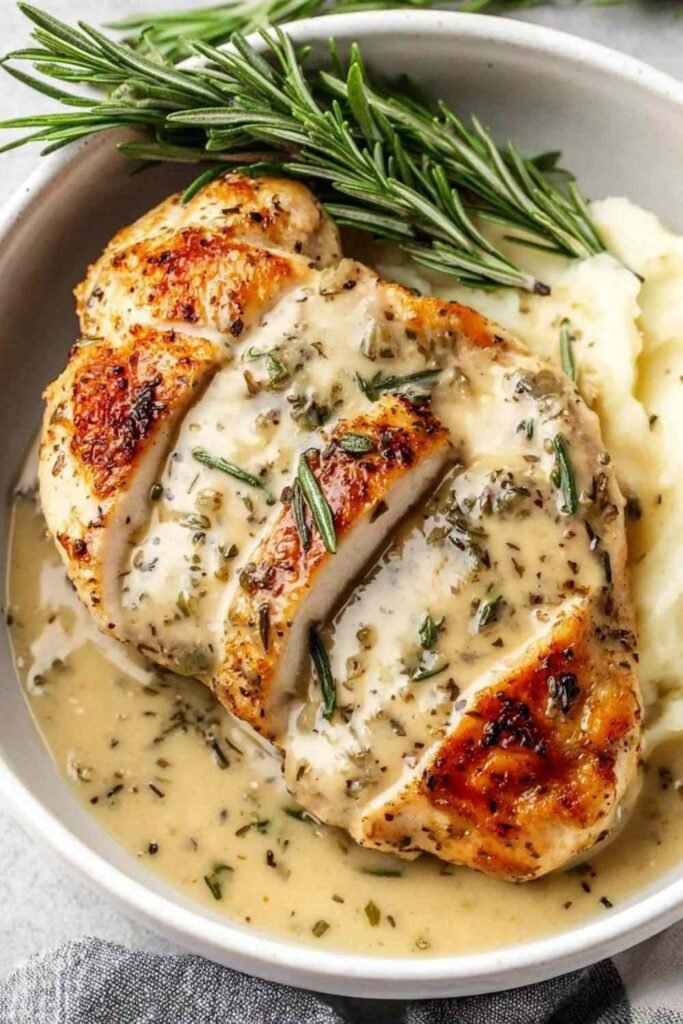
Garlic Mashed Potatoes: Creamy mashed potatoes and that rosemary Dijon pan sauce are an absolutely irresistible combination. Great for a cozy weeknight dinner.
Steamed Broccoli: Simple, nutritious, and fast. Broccoli adds color and a mild flavor that lets the chicken stay center stage. If you enjoy quick chicken and vegetable dinners, our Easy Chicken Zucchini Bake uses the same weeknight simplicity and pairs equally well with a side of greens.
Cranberry Almond Salad: This adds a tangy crunch that contrasts the savory warmth of the chicken. A great option for lighter spring or summer meals.
Chicken with Orzo: If you love a full one-pan meal approach, our Easy Balsamic Chicken and Veggie Orzo is a great companion recipe to have in rotation alongside this dish — different flavor profile but the same satisfying comfort.
Storage and Serving Tips
Let the chicken cool completely before storing. Place it in an airtight container with any remaining sauce and refrigerate for up to 3 days. For longer storage, freeze individual portions for up to 2 months and thaw overnight in the refrigerator.
To reheat, place the chicken in a covered baking dish and warm in a 350 degree F oven for about 15 minutes until heated through. I recommend spooning extra sauce over the top before covering so it stays moist. Avoid the microwave if you can — it dries out the chicken quickly.
Pro tip — leftover Rosemary Dijon Chicken sliced cold over a green salad the next day is genuinely one of my favorite lunches. If you enjoy creamy chicken dishes like this one, you might also want to try our Creamy Smothered Chicken and Rice for another rich weeknight option.
FAQs
Can I use chicken thighs instead of chicken breasts for this recipe?
Yes, boneless skinless chicken thighs work great here. They are naturally juicier and more forgiving if slightly overcooked. Add 5 to 7 extra minutes of bake time and confirm the internal temperature reaches 165 degrees F.
Can I skip the white wine in the sauce?
You can substitute an equal amount of low-sodium chicken broth. The sauce will be slightly less complex but still very flavorful. The wine mainly helps deglaze the pan and adds a little acidity to balance the cream.
How long should I marinate the chicken?
A minimum of 30 minutes is needed for the mustard and garlic to penetrate the meat. For the best results, marinate for 2 to 4 hours. Avoid going past 8 hours as the acid in the mustard can start to break down the texture of the chicken.
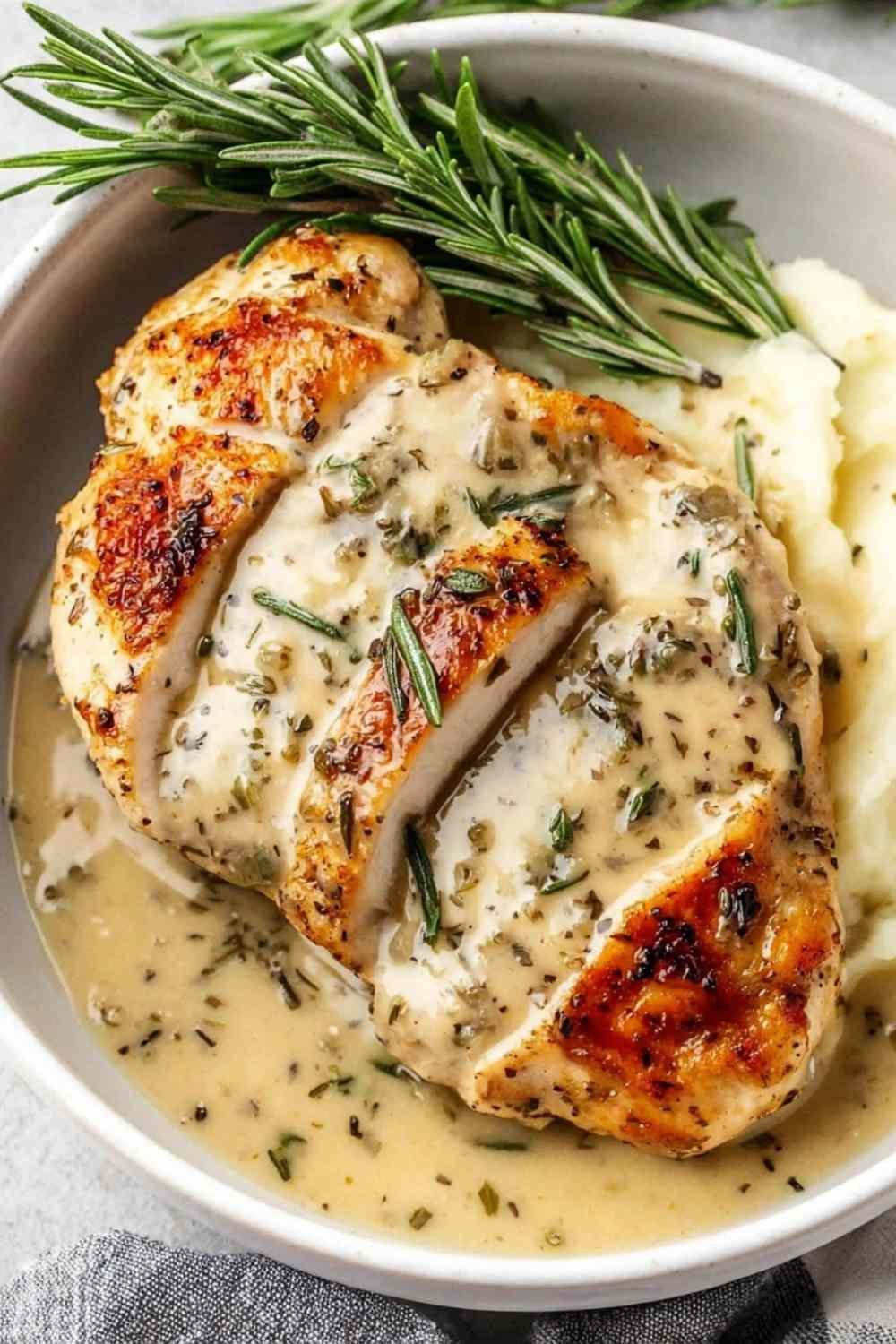
Rosemary Dijon Chicken
Ingredients
Equipment
Method
- In a small bowl, whisk together the Dijon mustard, minced garlic, 1 tbsp olive oil, and a pinch of black pepper until smooth. Place the chicken breast halves in a shallow dish or resealable bag, pour the marinade over them, and refrigerate for at least 30 minutes.
- Preheat your oven to 375 degrees F. Remove chicken from the fridge and let it rest at room temperature for 10 minutes. Lightly coat each piece in all-purpose flour and season with salt and pepper.
- Heat olive oil and butter in an oven-safe skillet over medium-high heat. Once the butter is foaming, sear the chicken for 3 minutes per side until deep golden brown. Do not move the chicken while searing. Work in batches if needed to avoid crowding the pan.
- Remove the chicken and set aside. Add the garlic and rosemary sprigs to the hot skillet. Stir for 30 seconds until fragrant, then pour in the white wine to deglaze, scraping up the browned bits from the bottom of the pan.
- Whisk in the Dijon mustard and heavy cream. Stir over medium heat until smooth and slightly thickened, about 2 to 3 minutes. Taste and adjust seasoning. If sauce is too thick, add a splash of white wine.
- Return the seared chicken to the skillet, nestling it into the sauce. Transfer the skillet to the oven and bake uncovered for 25 to 30 minutes, basting with pan juices halfway through.
- Use a meat thermometer to confirm the internal temperature reaches 165 degrees F. Remove from the oven and let the chicken rest in the pan for 5 minutes before serving.