
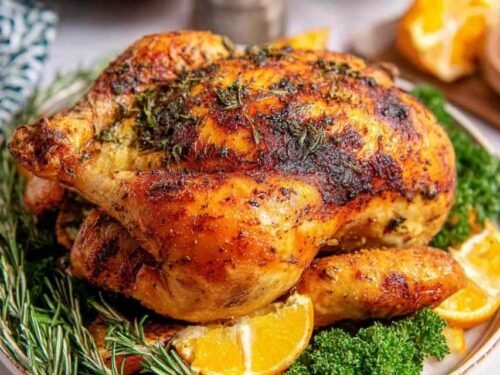
Roast chicken is one of those recipes that looks impressive but is honestly much simpler than most people think. A whole bird, a handful of pantry spices, and a hot oven are really all you need to pull off a dinner that feels special on any night of the week.
The first time I roasted a whole chicken at home, I was convinced something would go wrong. Instead, I pulled it out of the oven golden, juicy, and smelling incredible — and my kids immediately asked when we were having it again. This easy roast chicken has been in my regular rotation ever since. It skips the fuss, keeps the flavor, and gives you a dinner that wows every single time. Your family will thank you!
Table of Contents
Ingredients for Roast Chicken
Everything about this recipe works because the ingredients are simple and each one pulls its weight. I always use unsalted butter here so I can control the salt level myself — it makes a real difference in how the seasoning comes together.
For the Chicken:
- 1 whole chicken (3.5 to 5 pounds) — I recommend air-chilled chicken if you can find it; the skin crisps up much better than water-chilled birds
- 4 tablespoons unsalted butter, softened
- 1 teaspoon Italian seasoning
- 1 teaspoon garlic powder
- 1 teaspoon fine sea salt — my preference is fine sea salt over table salt for more even, balanced seasoning
- 1/4 teaspoon black pepper
For the Pan:
- 1 yellow onion, sliced
- 1 to 2 medium carrots, coarsely chopped
- 3/4 cup water, chicken broth, or white wine — in my experience, chicken broth adds the most depth to the pan drippings
For the Cavity:
- 1/2 lemon, cut into 2 pieces
- A few sprigs of fresh rosemary and/or thyme
Step-by-Step Instructions
I recommend reading through all the steps once before you start. A hot oven and a thoroughly dried bird are the two things that guarantee golden, crispy skin every single time.
Step 1: Pull the chicken out of the refrigerator and let it sit at room temperature for 20 minutes. While it rests, preheat your oven to 425 degrees F and position a rack in the lower center of the oven.
Step 2: In a small bowl, mix together the softened butter, Italian seasoning, garlic powder, salt, and pepper until well combined. Set aside.
Step 3: Scatter the sliced onion and chopped carrots across the bottom of a large cast iron skillet, rectangular baking dish, or roasting pan in an even layer. These vegetables act as a natural roasting rack and build flavor into the drippings as the chicken cooks.
Step 4: Remove the chicken from its packaging. Check the cavity and discard any giblet packet inside. Pat the chicken completely dry with paper towels — this step is non-negotiable for crispy skin. Place the chicken breast side up on top of the vegetables and tuck the wings under the body. Stuff the lemon pieces and herb sprigs into the cavity.
Step 5: Use a small spoon to gently loosen the skin from the breast meat without tearing it. Push a spoonful of the herb butter under the skin on each breast and rub it around to spread evenly. Rub the remaining butter all over the outside of the chicken — breasts, thighs, and legs.
Step 6: If you want to truss the bird, tie the legs together with kitchen twine close to the body. This step is optional. Without trussing, the chicken may cook 10 to 15 minutes faster, so start checking the internal temperature earlier.
Step 7: Pour the 3/4 cup of liquid into the bottom of the pan. This prevents the drippings from burning and keeps moisture in the roasting environment.
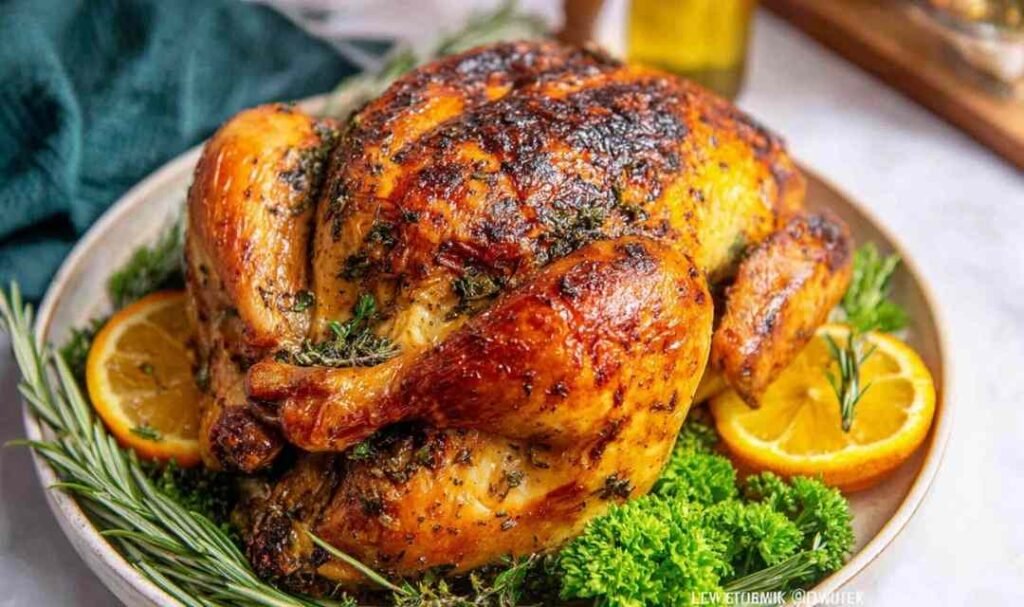
Step 8: Roast at 425 degrees F for 65 to 90 minutes, until an instant-read thermometer inserted into the thickest part of the thigh (not touching bone) reads 165 degrees F. A 3.5-pound bird will typically be done closer to 65 minutes; a 5-pound bird will need closer to 90. If the skin browns too quickly before the chicken is done, tent loosely with foil and remove it for the last 5 to 10 minutes to re-crisp the skin.
Did you enjoy this recipe?
Save it to your Pinterest board and make it again later!
📌 Save this Recipe@dinnerchickenrecipes
Step 9: Transfer the roast chicken to a cutting board and let it rest uncovered for 15 minutes before carving. Skipping the rest is the most common mistake people make — the juices need time to redistribute so every slice stays moist.
What to Serve with Roast Chicken
Roast chicken pairs beautifully with sides that soak up the savory pan drippings or add a little brightness to balance the richness of the butter-roasted skin.
Garlic Roasted Vegetables: This is my go-to side for any roast chicken dinner. High-heat roasting caramelizes the vegetables into something deeply savory that mirrors the flavor of the chicken perfectly. You can even roast them in the same oven at the same temperature.
Creamy Garlic Sauce Potatoes: Tender potatoes in a rich garlic cream sauce are made for soaking up roast chicken drippings. This is pure comfort food and one of the most crowd-pleasing sides you can put on the same plate.
Easy Garlic Bread with Sliced Bread: Simple, buttery garlic bread rounds out a roast chicken dinner in the most satisfying way. It is the kind of easy addition that makes the whole meal feel complete without any extra effort.
Homemade Cheesy Breadsticks: Pull-apart cheesy breadsticks bring a fun, shareable energy to the table. Kids love them alongside roast chicken, and they take almost no time to put together.
Easy Vegetable Soup: A light, broth-based vegetable soup served alongside a smaller portion of roast chicken makes for a balanced, satisfying dinner. The contrast between a clean, light soup and the rich buttery chicken works really well, especially in the colder months.
Healing Ginger Garlic Chicken Noodle Soup: If you end up with leftover roast chicken, this is one of the best ways to use it. Shred the meat and add it straight into this warming noodle soup for a cozy, nourishing meal the next day.
Leftovers and Storage Tips
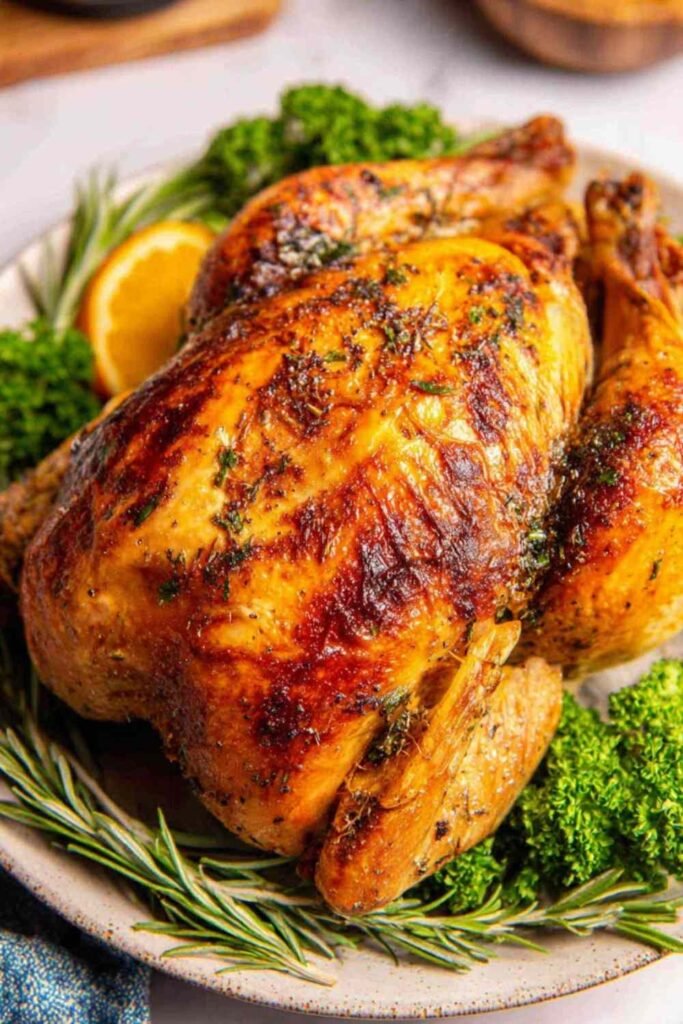
Leftover roast chicken keeps well in the refrigerator for up to 4 days. Store carved meat in an airtight container and save the carcass in a zip bag in the freezer — it makes outstanding homemade chicken broth that is far better than anything from a carton.
To reheat, I recommend placing the chicken in a covered baking dish with a small splash of chicken broth and warming it in a 325 degree oven for 10 to 15 minutes. This keeps the meat juicy rather than drying it out the way the microwave tends to. For a quick option, the microwave works on 50 percent power in short 60-second intervals.
Pro tip: leftover roast chicken is one of the most versatile ingredients in your refrigerator. Shred it and use it in tacos, stir it into pasta, pile it onto sandwiches, or toss it into a quick stir fry. One bird can carry your meals for several days with very little extra work.
FAQs
Do I need to brine the chicken before roasting?
Not for this recipe. The herb butter rubbed under and over the skin handles both flavor and moisture. The real key is patting the chicken completely dry before buttering — that is what delivers crispy skin without any brining or marinating.
How do I know when the roast chicken is fully cooked?
An instant-read thermometer is the only reliable method. Insert it into the thickest part of the thigh without touching the bone and look for 165 degrees F. Juices running clear is a helpful visual clue, but the thermometer removes all guesswork. A 3.5-pound bird usually hits temperature around 65 minutes; a 5-pound bird closer to 85 to 90 minutes.
Can I use a different pan if I do not have a cast iron skillet?
Yes. A rectangular baking dish or a standard roasting pan both work well. The important thing is that the pan has sides deep enough to hold the vegetables and liquid without spilling. Avoid a flat rimmed sheet pan, as the drippings will burn quickly at 425 degrees.
Conclusion
This no-fuss roast chicken delivers everything you want in a weekend dinner — golden crispy skin, juicy meat, and a kitchen that smells incredible from the moment it goes in the oven. It takes about 20 minutes of hands-on time and the oven handles the rest. Try it once and it will earn a permanent spot in your dinner rotation.
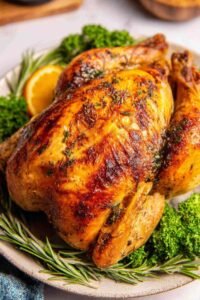
Easy No Fuss Roast Chicken
Ingredients
Equipment
Method
- Let the chicken sit at room temperature for 20 minutes. Preheat the oven to 425 degrees F with a rack in the lower center position.
- In a small bowl, mix together the softened butter, Italian seasoning, garlic powder, salt, and pepper until combined. Set aside.
- Scatter the sliced onion and chopped carrots across the bottom of a large cast iron skillet or roasting pan in an even layer.
- Remove the chicken from packaging and discard any giblet packet. Pat the chicken completely dry with paper towels. Place breast side up on top of the vegetables and tuck the wings under the body. Stuff the lemon pieces and herb sprigs into the cavity.
- Use a small spoon to loosen the skin from the breast meat. Push a spoonful of herb butter under the skin on each breast and rub to spread. Rub the remaining butter all over the outside of the chicken.
- Optional: tie the legs together with kitchen twine close to the body. Without trussing, the chicken may cook 10 to 15 minutes faster, so check the internal temperature earlier.
- Pour 3/4 cup of water, chicken broth, or white wine into the bottom of the pan.
- Roast at 425 degrees F for 65 to 90 minutes. A 3.5-pound bird typically reaches temperature around 65 minutes; a 5-pound bird closer to 90. Cook until an instant-read thermometer inserted into the thickest part of the thigh, not touching bone, reads 165 degrees F. If the skin browns too quickly, tent loosely with foil and remove it for the last 5 to 10 minutes.
- Transfer to a cutting board and let the chicken rest uncovered for 15 minutes before carving. Resting allows the juices to redistribute so every slice stays moist.