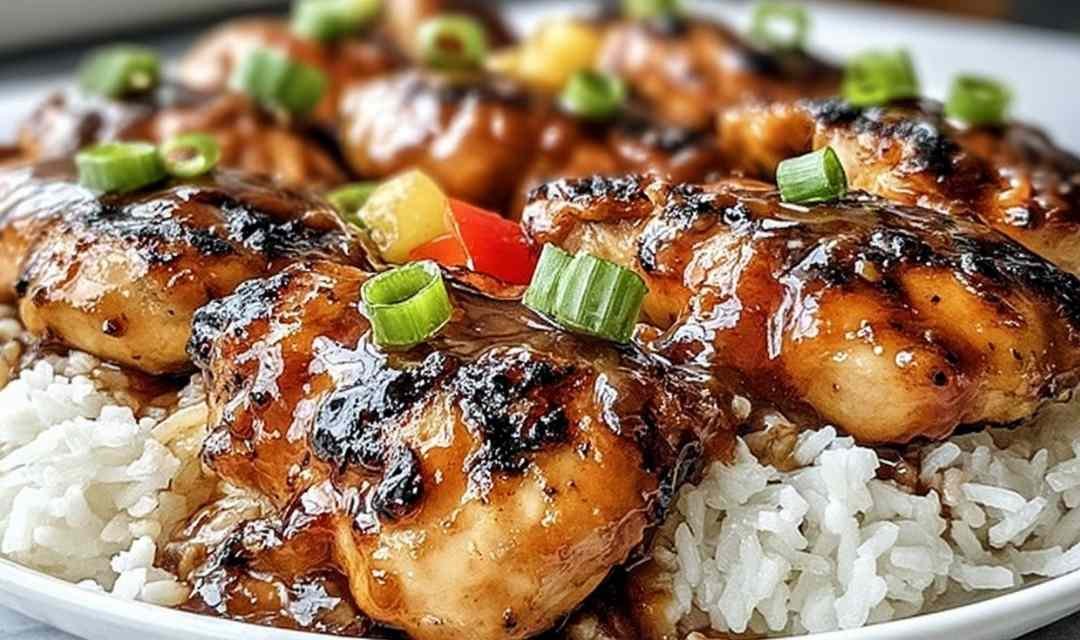


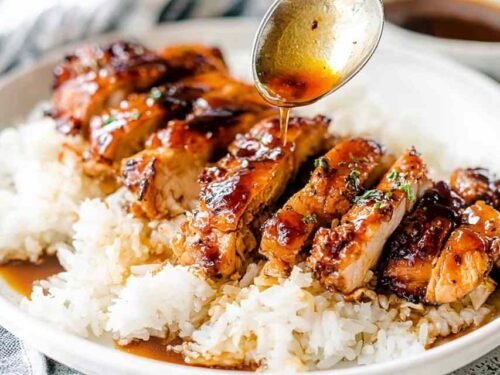
Chicken teriyaki is one of those weeknight dinners that checks every single box: fast, flavorful, and guaranteed to get everyone to the table without a fuss. One bite of this juicy, perfectly glazed chicken and the takeout menu stays in the drawer where it belongs. I put this together on a Tuesday night when I had exactly 25 minutes before soccer pickup, and it still came out better than the Japanese place down the street.
Table of Contents
Ingredients for Easy Chicken Teriyaki
I always keep these three marinade ingredients stocked in my pantry because they do double duty as both the marinade and the finishing glaze. No fancy grocery run needed for this one.
For the Chicken
- 3/4 lb chicken thighs or chicken breast, flattened to 3/4 inch thick
- 1 tablespoon vegetable oil
- 1 tablespoon toasted white sesame seeds, for serving
Chicken Teriyaki Marinade and Sauce
- 1/3 cup low sodium soy sauce – I always use low sodium so the glaze doesn’t taste salty once it reduces
- 1/3 cup mirin – My go-to is authentic Japanese mirin; substitute with sake or dry white wine if needed. For non-alcoholic, use chicken stock with a few drops of rice vinegar
- 1/3 cup sugar – plain white sugar gives the cleanest glaze; honey, agave, or brown sugar all work too
- 1 teaspoon minced garlic or ginger, optional – Pro tip: ginger adds a subtle warmth that makes the sauce taste more complex
Step-by-Step Instructions
In my experience, the biggest mistake people make with chicken teriyaki is skipping the glaze step at the end. That reserved sauce is where all the magic happens, so don’t rush it.
Step 1: Flatten the Chicken
Place your chicken on a cutting board and use a meat mallet or the heel of your hand to press it to an even 3/4 inch thickness. This is not optional: uneven chicken means some parts are overcooked and dry by the time the thick parts are done. Transfer to a zipper bag or large bowl.
Step 2: Mix the Marinade
Whisk together the soy sauce, mirin, and sugar until the sugar fully dissolves, about 1 minute. Pour exactly half into a separate bowl or jar and set aside for glazing later. Do not skip this step or you will have nothing food-safe to use as a glaze. Add the chicken to the remaining half and let it marinate for at least 15 minutes at room temperature, or overnight in the fridge for deeper flavor.
Step 3: Cook the Chicken (Grill or Pan Fry)
Heat your skillet or grill over medium-high heat and add the oil. Remove the chicken from the marinade and wipe off the excess with your fingers so it doesn’t steam instead of sear. If using skin-on chicken, lay it skin-side down first. Cook without moving it until the bottom is deep golden brown, about 4 to 5 minutes, then flip. The chicken is ready to flip when it releases easily from the pan.
Step 4: Add the Glaze
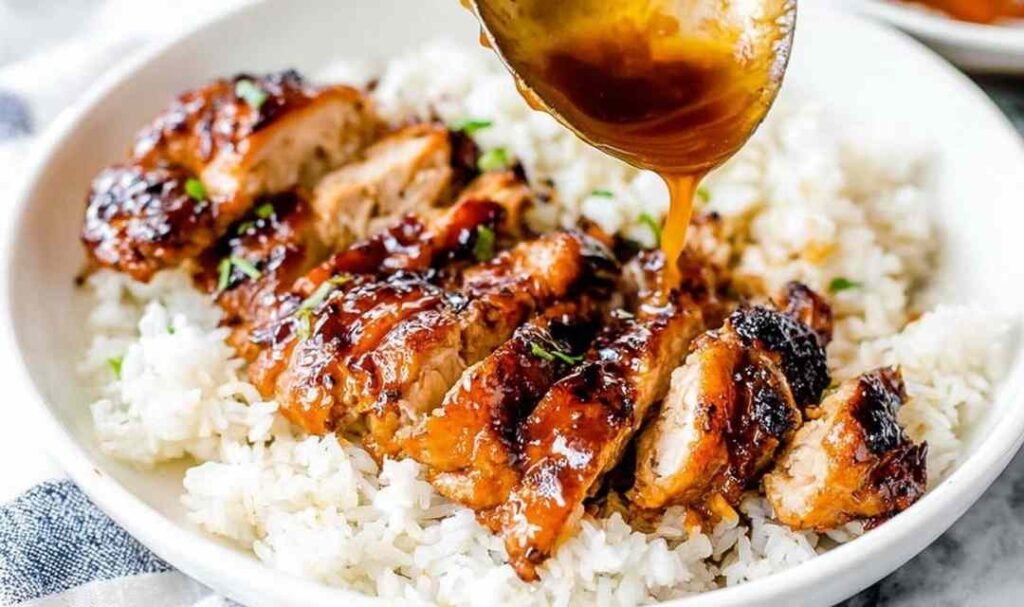
Pour in your reserved teriyaki sauce during the last 3 minutes of cooking. Watch it carefully: the sugar will bubble and reduce quickly into a shiny, sticky glaze. Tilt the pan and spoon the glaze over the chicken as it thickens. If it starts to look like it might burn, drop the heat slightly and keep spooning.
Step 5: Check Temperature and Rest
Use an instant-read thermometer to confirm the internal temperature has reached 165 degrees F and the juices run clear. Pull the chicken off the heat and let it rest for 2 to 3 minutes before slicing. Resting lets the juices redistribute so every bite stays juicy.
Step 6: Slice and Serve
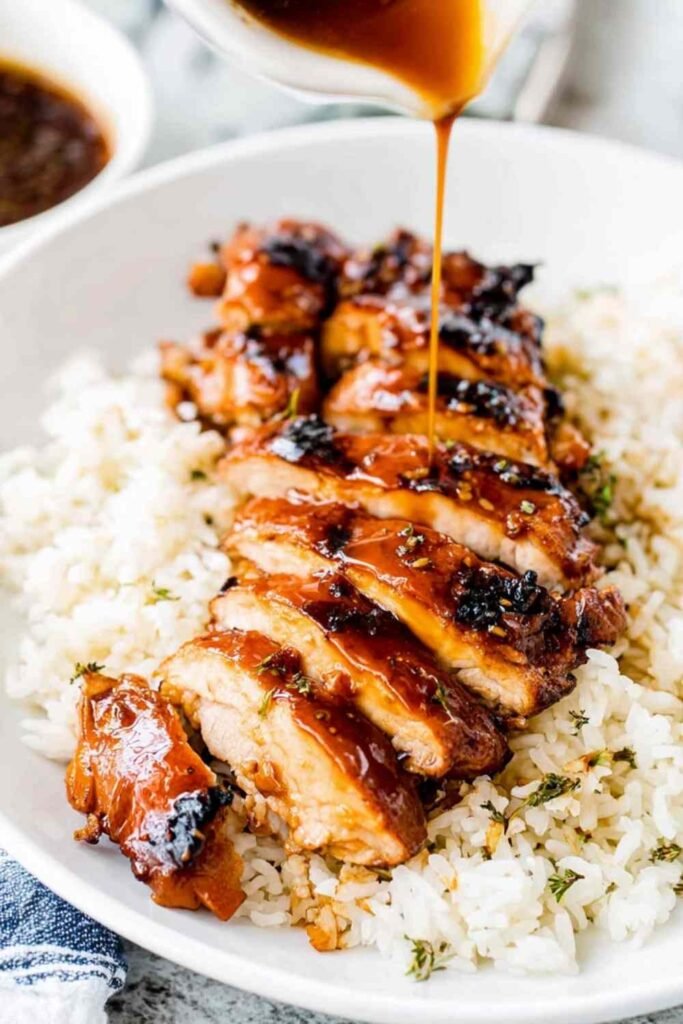
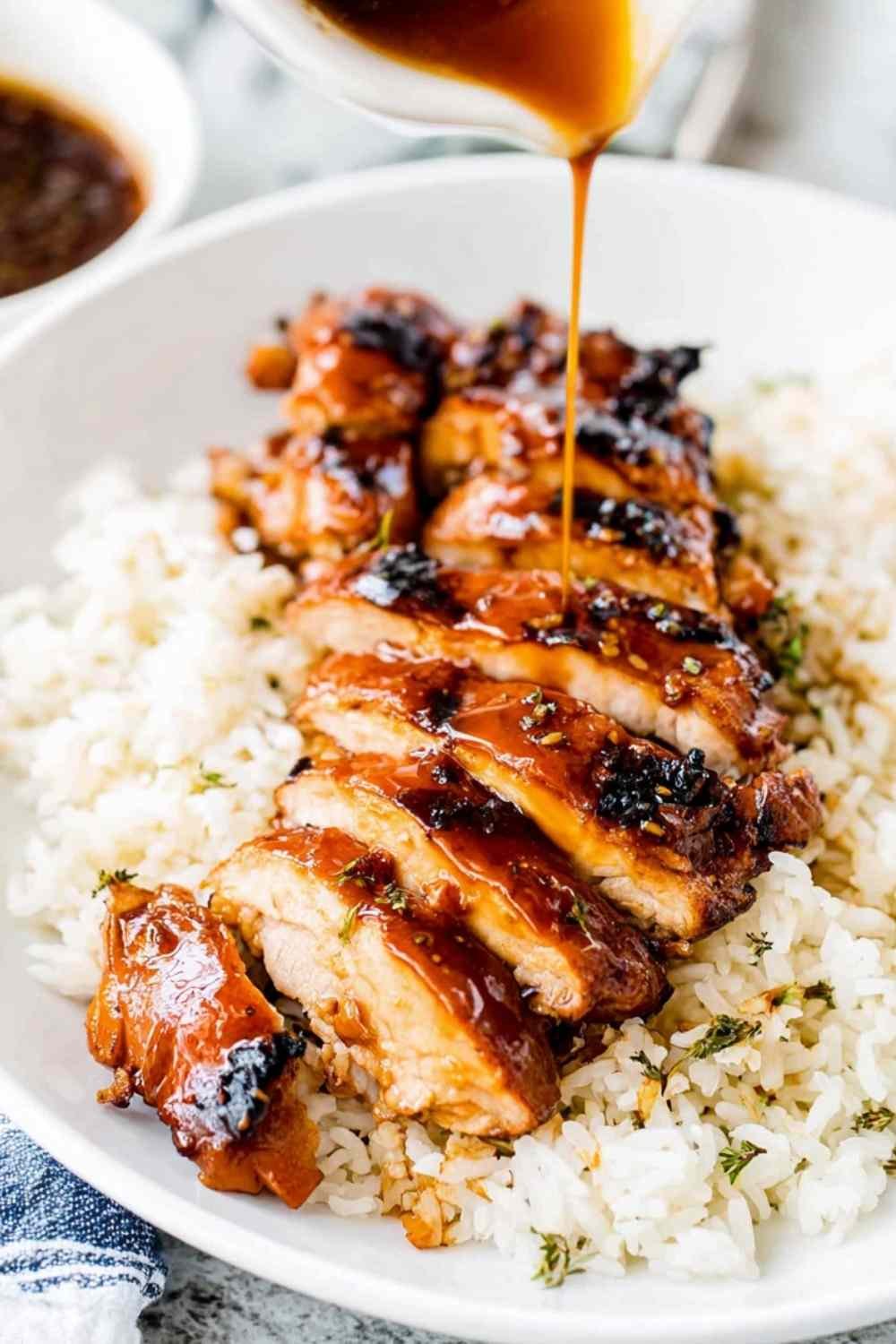
Cut the chicken into bite-sized pieces at a slight angle. Arrange over steamed white rice, spoon any remaining glaze from the pan over the top, and finish with a scatter of toasted sesame seeds. Serve right away while the glaze is still warm and glossy.
Optional Baking Method: Preheat your oven to 400 degrees F and line a baking pan with foil. Bake the marinated chicken for 18 to 20 minutes, brushing on the reserved sauce 2 to 3 times during the last 5 to 7 minutes. Keep a close eye on it: the sugar in the marinade burns fast, especially near the end. If it starts to darken too quickly, drop the oven to 375 degrees F.
What to Serve with Chicken Teriyaki
The best sides for chicken teriyaki balance its sweet and savory glaze with something bright, crunchy, or hearty. Here are the pairings that work every time at my table.
Steamed White or Brown Rice: Plain steamed rice is the classic pairing for a reason. It soaks up every drop of that teriyaki glaze without competing with the flavors.
Asian-Style Rice Bowls: If you love building a full bowl, try pairing your chicken teriyaki with the same bowl-style setup from these Sticky Chicken Bowls. The layered rice, sauce, and toppings approach works just as well with teriyaki chicken.
Noodles: Skip the rice and serve your teriyaki chicken over noodles instead. This Chicken Lo Mein recipe uses a similar soy-based sauce, so the flavors pair naturally.
Stir-Fried Vegetables: A quick stir fry of snap peas, carrots, and bell peppers adds crunch and color. For another Asian-inspired weeknight option with bold sauce, check out this Thai Peanut Chicken.
Asian Cucumber Salad: Cool, tangy cucumber salad cuts right through the richness of the teriyaki glaze. It takes five minutes to make and brings freshness to every bite.
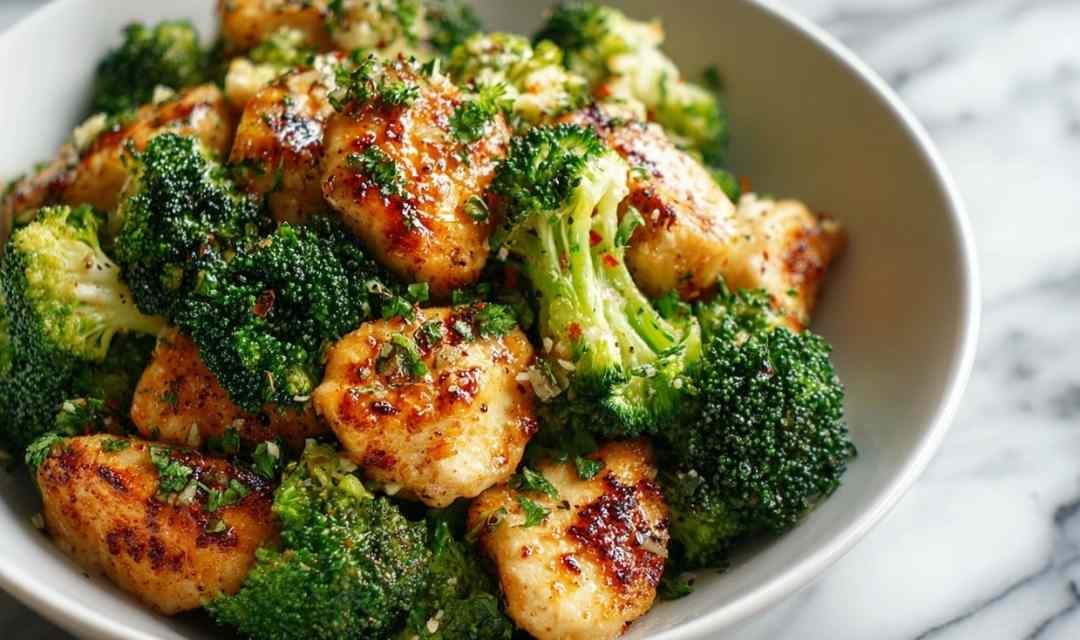
Light Vegetable Side: Sesame broccoli salad or simple roasted vegetables round out the meal. If you enjoy easy chicken and vegetable combos, this Easy Chicken Zucchini Bake uses the same one-pan, minimal-effort approach.
How to Store and Reheat Leftover Chicken Teriyaki
Store leftover chicken teriyaki in an airtight container in the refrigerator for up to 4 days. Keep any remaining glaze in a separate small jar so the chicken stays tender and doesn’t turn soggy overnight.
To reheat, I recommend warming sliced chicken in a nonstick skillet over medium heat with a small splash of water or a spoonful of extra teriyaki sauce. This keeps the glaze glossy and the chicken moist. The microwave works fine for speed, but the skillet gives much better texture and keeps that sticky coating intact.
Leftovers are genuinely good the next day. The chicken absorbs even more of the glaze flavor overnight, so rice bowls with leftover teriyaki chicken are one of my favorite quick lunches. You can also tuck slices into lettuce wraps or toss them over noodles.
Frequently Asked Questions
Can I use chicken breast instead of chicken thighs?
Yes, both cuts work well. Chicken thighs are naturally juicier and more forgiving if you cook them a minute or two longer. Chicken breast is a great lean option but dries out faster, so pull it off the heat as soon as your thermometer reads 165 degrees F.
What can I substitute for mirin?
Sake or dry white wine are the closest substitutes and keep the flavor authentic. For a non-alcoholic version, use low-sodium chicken stock mixed with a small splash of rice vinegar or lemon juice. The glaze will still thicken and taste great.
Why should I reserve half the marinade before adding the chicken?
Once raw chicken has been in the marinade, that liquid is no longer safe to use directly as a sauce without cooking it to a full boil. Reserving half before the chicken touches it gives you a clean, food-safe glaze to use at the end without any extra steps.
Easy Chicken Teriyaki with Marinade
Ingredients
Equipment
Method
- Flatten the chicken to an even 3/4 inch thickness using a meat mallet or the heel of your hand. Place in a zipper bag or bowl.
- Whisk together soy sauce, mirin, and sugar until the sugar fully dissolves. Reserve exactly half in a separate bowl for glazing. Add chicken to the remaining half and marinate for at least 15 minutes, or overnight in the fridge.
- Heat skillet or grill over medium-high heat. Add oil. Remove chicken from marinade, wipe off excess. Cook skin-side down first if using skin-on chicken. Cook 4 to 5 minutes without moving until deeply golden, then flip.
- Add reserved teriyaki sauce during the last 3 minutes of cooking. Let it reduce and thicken into a glaze, spooning it over the chicken as it cooks. Lower heat slightly if it starts to burn.
- Check that internal temperature reaches 165 degrees F. Rest for 2 to 3 minutes, then slice and serve over steamed rice. Top with sesame seeds and remaining glaze.