
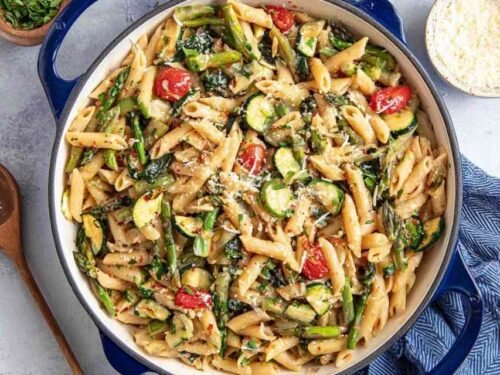
Pasta Primavera is the kind of dish that makes you feel like a real cook without requiring much effort at all. It is loaded with colorful vegetables, tossed in a bright lemon butter sauce, and finished with fresh herbs and Parmesan that pulls everything together. I reach for this recipe every spring and summer when the produce section is irresistible.
The first time I made pasta primavera, I had a bunch of vegetables in the fridge that needed to be used before they went bad. What came out of that skillet was so fresh and vibrant that my whole family wanted seconds. The lemon zest, fresh dill, and toasted pine nuts are what set this version apart from anything you could get at a restaurant. It comes together in 30 minutes, uses one skillet, and the leftovers are just as good the next day. This is about to become your new favorite!
Table of Contents
Ingredients for Pasta Primavera
I always try to use the freshest vegetables I can find for this recipe because they really are the star of the dish. I recommend buying vegetables that are firm and brightly colored at the store — the quality shows in every bite. Here is everything you need for this pasta primavera.
- 10 oz penne pasta (or pasta of choice — I usually use penne because it catches the sauce in every ridge)
- 2 tablespoons olive oil
- 2 tablespoons butter (my preference is unsalted so you can control the saltiness yourself)
- 1/2 small red onion (thinly sliced)
- 2 cups broccoli florets (chopped into small bite-size pieces)
- 1 bunch asparagus (woody ends trimmed and discarded, chopped into 2-inch pieces)
- 1 medium zucchini (halved lengthwise, then chopped into 1/2-inch thick half-rounds)
- 3/4 cup cherry tomatoes (halved — pro tip: use a mix of red and yellow if you can find them for a prettier plate)
- 5 cloves garlic (minced)
- Zest of 1 medium lemon (about 1 teaspoon)
- 2 tablespoons fresh lemon juice (freshly squeezed — in my experience, bottled lemon juice makes the whole dish taste flat)
- 1/4 teaspoon salt
- 1/8 teaspoon black pepper
- 1 tablespoon chopped fresh dill
- 1/2 cup freshly grated Parmesan cheese, plus more for serving (I recommend grating it yourself for the best melt)
- 1/4 cup toasted pine nuts
- Chopped fresh basil, for serving
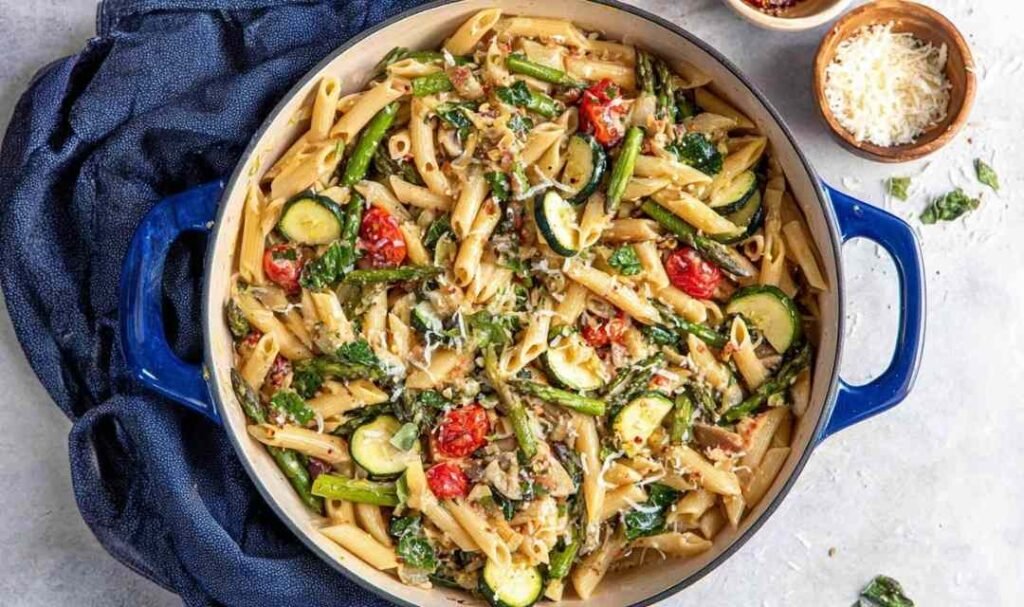
Step-by-Step Instructions
In my experience, the key to a great pasta primavera is cooking the vegetables in stages so nothing gets mushy. Timing each vegetable correctly is what gives you that beautiful crisp-tender texture throughout.
Step 1: Bring a large pot of well-salted water to a boil. Add the pasta and cook according to package directions until al dente. Before draining, scoop out 1/4 cup of the starchy pasta cooking water and set it aside. Drain the pasta and set aside.
Step 2: While the pasta cooks, heat the olive oil and butter together in a large skillet over medium-high heat. Once the butter melts and the pan is hot, add the red onion, broccoli, and asparagus. Saute for 2 minutes, stirring often.
Step 3: Add the zucchini and continue sauteing for 2 to 3 more minutes, stirring often. The vegetables should start to pick up a little color but still look bright and firm at this point. Do not let them go limp.
Step 4: Add the cherry tomatoes and saute for 2 minutes until they just begin to soften and release their juices. Then stir in the minced garlic and cook for 1 more minute, stirring constantly, until fragrant. Remove the pan from heat immediately. Garlic burns fast and turns bitter if left even a moment too long.
Step 5: Add the drained pasta, reserved pasta cooking water, lemon zest, lemon juice, salt, pepper, and fresh dill to the skillet. Toss everything together until well combined. The pasta water helps the sauce coat every piece evenly.
Step 6: Sprinkle the freshly grated Parmesan evenly over the pasta and toss again to combine. Serve immediately topped with toasted pine nuts, fresh basil, and extra Parmesan.
Perfect Pairings for Pasta Primavera
This dish is bright and vegetable-forward, so the best companions add protein, crunch, or a little extra comfort alongside it.
Melt in Your Mouth Chicken Breast: A simply seasoned baked chicken breast sliced on top turns pasta primavera into a complete protein-rich dinner. My Melt in Your Mouth Chicken Breast pairs beautifully with the lemon herb notes in this pasta and comes together just as easily.
Balsamic Glazed Chicken and Veggies: For a more elevated pairing, my Balsamic Glazed Chicken and Veggies brings a tangy-sweet flavor that complements the lemon butter sauce without overpowering the fresh vegetables.
Easy Garlic Bread with Sliced Bread: Warm, crispy garlic bread soaks up any extra lemon butter from the plate and is one of the classic best sides for pasta primavera. My Easy Garlic Bread with Sliced Bread is ready in minutes and always disappears fast.
Lemon Chicken Romano: If you want a pan-seared chicken option with a citrusy flavor that ties directly into the pasta, my Lemon Chicken Romano uses the same bright lemon profile and is a natural match for this dish.
Did you enjoy this recipe?
Save it to your Pinterest board and make it again later!
📌 Save this Recipe@dinnerchickenrecipes
Easy Balsamic Chicken Veggie Orzo: For a meatless dinner spread with two vegetable-forward dishes, my Easy Balsamic Chicken Veggie Orzo uses a similar fresh vegetable base and works beautifully alongside pasta primavera for guests or family dinners.
Crispy Gnocchi with Spinach and Feta: For a fun companion dish on an Italian-inspired dinner night, my Crispy Gnocchi with Spinach and Feta uses similar bright, herby flavors and adds satisfying texture contrast to the softer pasta.
Pesto Chicken Flatbread: As a light appetizer or starter before this pasta, my Pesto Chicken Flatbread echoes the fresh herb flavors running through the primavera and makes dinner feel a little more special without much extra work.
Broccoli and Mushroom Stir Fry: If you want a second vegetable side that complements the same garden-fresh theme, my Broccoli and Mushroom Stir Fry is quick and earthy and balances the brightness of the lemon pasta nicely.
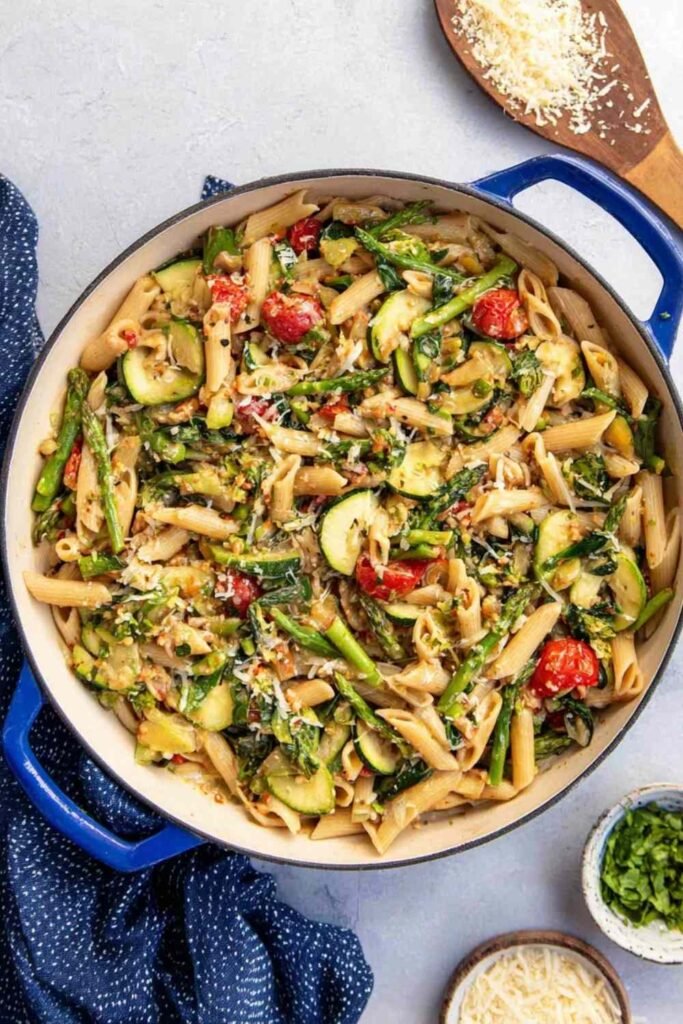
How to Store and Reheat Pasta Primavera
Leftover pasta primavera keeps well in an airtight container in the refrigerator for up to 3 days. The vegetables will soften slightly overnight but the flavor actually deepens and gets even better by the next day.
To reheat, I recommend a skillet over medium-low heat with a small splash of water or olive oil to loosen the pasta and bring everything back to life. Stir gently and heat for about 3 to 4 minutes. The microwave works in a pinch in 60-second intervals, but the skillet keeps the vegetables from getting too soft.
Pro tip: this pasta is also delicious served cold as a pasta salad the next day. Just add a drizzle of olive oil and a squeeze of fresh lemon before serving to brighten everything back up.
FAQs
Can I use different vegetables in pasta primavera?
Absolutely. This recipe is flexible by design. Bell peppers, snap peas, spinach, mushrooms, or corn all work well. Use whatever vegetables you have on hand or what looks best at the market. Just add harder vegetables first and softer ones toward the end so nothing gets overcooked.
Do I have to use pine nuts?
No, but they add a wonderful buttery crunch that is hard to replace. If you cannot find them or want a more affordable swap, toasted walnuts or slivered almonds work well. Just toast them in a dry pan for 2 to 3 minutes until golden before adding.
Can I make pasta primavera ahead of time?
You can prep the vegetables and cook the pasta a few hours ahead, but keep them separate until just before serving for the best texture. If storing overnight, the pasta will absorb some sauce, so add a splash of olive oil when reheating to bring it back.
Conclusion
Pasta primavera is one of those recipes that feels special but comes together with almost no effort. The combination of fresh vegetables, lemon butter, and Parmesan creates a dish that is light, satisfying, and full of real flavor. Make it tonight and enjoy every colorful, herb-packed bite. This one earns a permanent spot on your dinner table.
Pasta Primavera
Ingredients
Equipment
Method
- Bring a large pot of well-salted water to a boil. Add pasta and cook according to package directions until al dente. Reserve 1/4 cup of pasta cooking water before draining. Drain pasta and set aside.
- While pasta cooks, heat olive oil and butter together in a large skillet over medium-high heat. Add red onion, broccoli, and asparagus. Saute for 2 minutes, stirring often.
- Add zucchini and continue sauteing for 2 to 3 more minutes, stirring often. Vegetables should pick up a little color but remain firm and bright.
- Add cherry tomatoes and saute for 2 minutes until they just begin to soften. Stir in minced garlic and cook for 1 more minute, stirring constantly, until fragrant. Remove pan from heat immediately.
- Add drained pasta, reserved pasta cooking water, lemon zest, lemon juice, salt, pepper, and fresh dill to the skillet. Toss until well combined.
- Sprinkle freshly grated Parmesan evenly over the pasta and toss again to combine. Serve immediately topped with toasted pine nuts, fresh basil, and extra Parmesan.